And the role artists have to play…
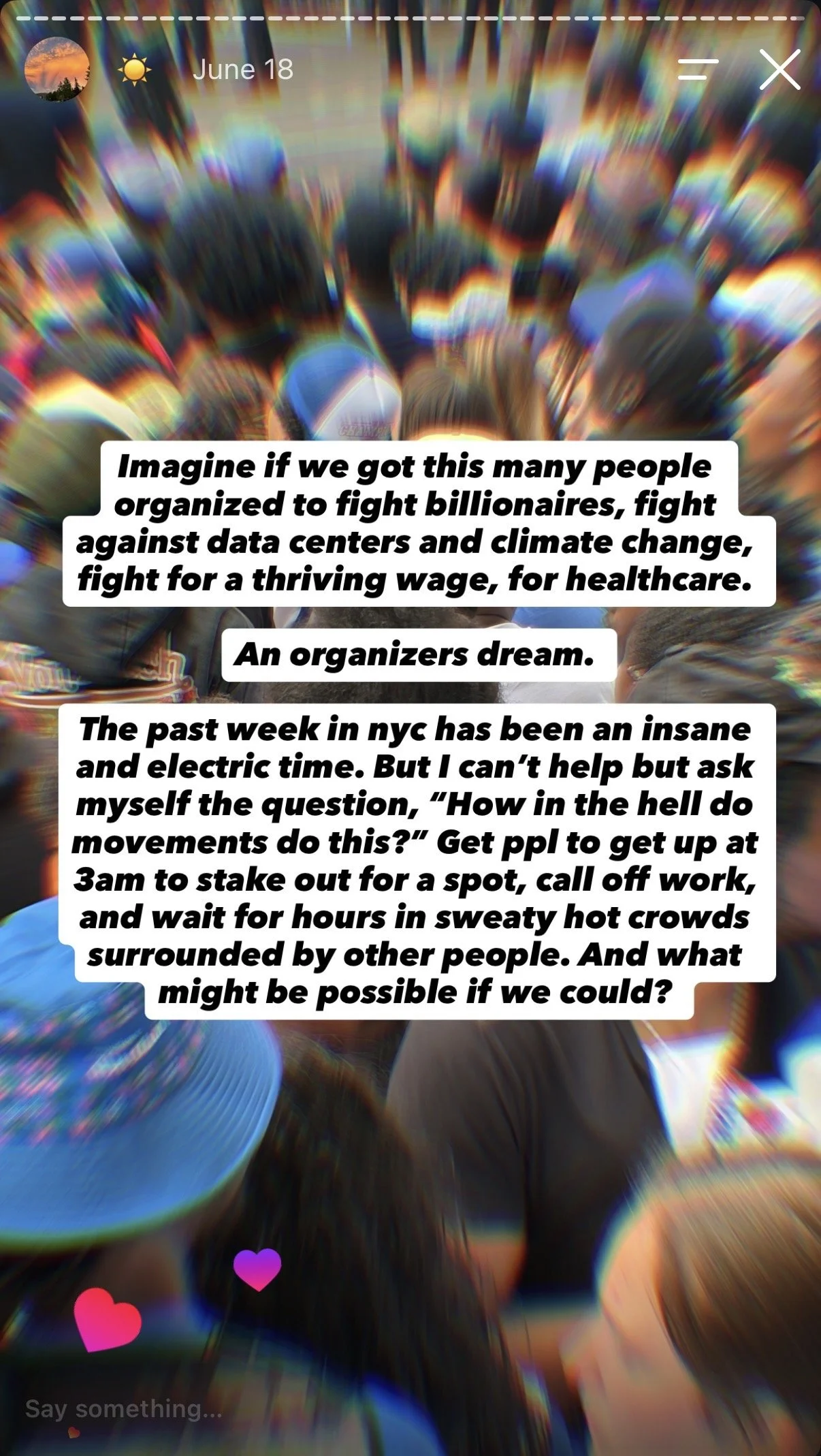
“Imagine if we got this many people organized to fight billionaires, fight against data centers and climate change, and fight for a thriving wage for healthcare… an organizer's dream. The past week in NYC has been an insane and electric time. But I can’t help but ask the question, “How in the hell do movements do this?” Get people to get up at 3 am to stake out for a spot, call off work, and wait for hours in sweaty, hot crowds surrounded by other people. And what might be possible if we could?” - Me, June 18th, Instagram
I’ve been in a state of despair around organizing and movement building. For the past 7 years, I’ve, through Sunrise, a youth climate movement fighting for a livable future for all, tried to figure out how to build the power and numbers to push the government to act on climate change with the scale and urgency it demands. (In addition to climate, at its core, we’re fighting for a world where people and the planet matter over profits and corporations.)
In my 7 years or so in Sunrise, now, it’s getting harder and harder to believe that anything - the phonebanking, the door-knocking, the direct actions, the arrests- is worth it, or shifting the balances of power in society. I’m a bit… jaded. I’ve seen us struggle to bring in new members. I’ve seen us struggle to organize beyond the bubble of young people who already believe what we do. I’ve seen us struggle to… build power. We have not set out to stop climate change; in fact, the effects of climate change, in the form of increased wildfires, increased storms, increased flooding, are coming at us full force across the globe.
And yes, it’s not all hopeless. There has been an exciting wave of candidates, from Zohran in office to Will Lawrence, Darializa Avila Chevalier, Abdul El-Sayed, and Melat Kiros, very progressive candidates, winning primaries. But what I really think is necessary is sustained, long-term commitment and sacrifice of millions of people across the country to birth a new nation, one that is not run by the billionaires and the corporate elite. And movements haven’t figured out how to do that. So I’ve been trying to look to other places for inspiration.
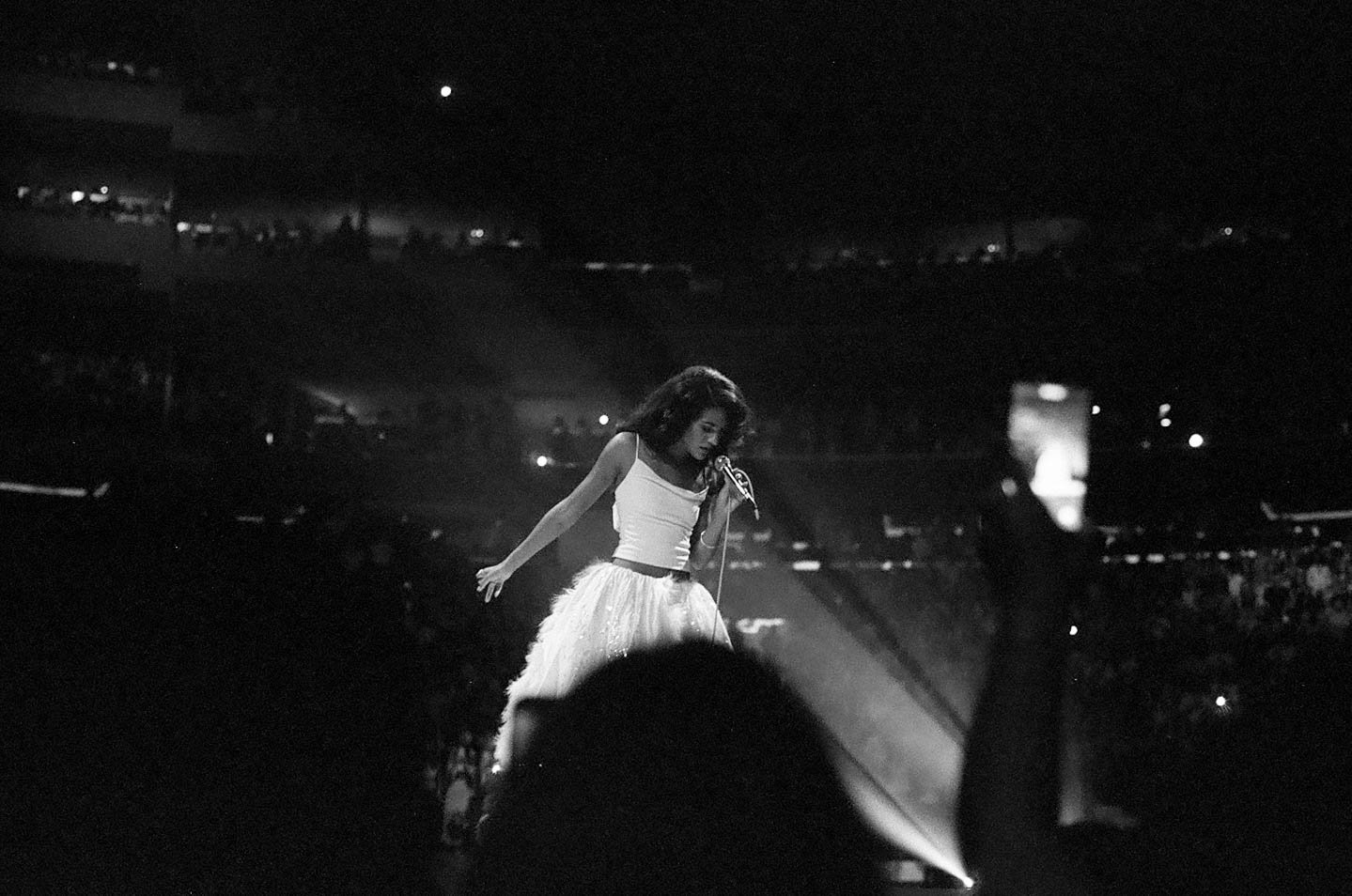
Olivia Dean playing a sold-out show at Madison Square Garden. August 17th, 2026. Dejah Powell.
Over the past month, I sat in a crowd of 20,000-ish people at an Olivia Dean concert at Madison Square Garden. I went to a Chance the Rapper concert in Central Park, packed with people bonding over their love of music. Earlier in the summer, I stood packed in Habana Outpost, watching thousands of New Yorkers watch the playoffs. I watched as thousands of New Yorkers descended upon Lower Manhattan, some getting up as early as 3 am, to celebrate the Knicks’ win. I sipped cider in crowded bars, celebrating and cheering on my favorite team (that was constantly changing with each loss or upset) in the World Cup.
In each of these moments, I’ve been so curious: if this many people can be mobilized for concerts, for soccer matches, for artists, why can’t they do the same for politics? Especially when the stakes – of winning livable wages, healthcare for all, of getting data centers out of our communities - are so much higher?
And this is the question - as an organizer, as an artist - that I feel deeply called to explore. What if artists used their platforms to not just re-post or uplift causes, but build real power by partnering with social movement groups? Inviting their fans to join direct actions, donate, or get involved with movement organizations? What if artists actually stood up to corporations and used their platform and leverage to get wins for everyday working people? One example is Olivia Dean, who called out Ticketmaster for their wild resale prices; as a result, Ticketmaster capped future resale tickets and gave funds to those who overpaid for resale tickets. It didn’t stop ticket scalpers on other sites, but it was a start.
As I reflect on my journey organizing over the past 7 years, and look ahead to where I feel my interest is being called, I’m so intrigued about what exists at the intersection of arts & social movements. So much so that I feel a calling to explore what might be possible if more artists used their power, leverage, and resources to uplift movements, organize more young people, and fight back against corporations to achieve wins for their fans.
I always come back to this quote by Toni Cade Bambara, “The role of the artist is to make the revolution irresistible.” And what would it take to make politics core to the cultural fabric of the United States? And what role can artists play in making that possible?